In Praise of Specificity in Climbing Writing
By: Katie Ives | This essay previously appeared in the June 2026 Newsletter
Over a decade ago, a ski magazine editor told me that he envied climbing writers because the experience of ascent seemed to lend itself readily to precise, vivid descriptions. As we make our way up a cliff, we search for small details with an existential urgency: a quartz crystal large enough for fingers to grasp, a billow of ice solid enough for an axe point to hold, a crust of snow consolidated enough to bear our weight. And as we rely keenly on our senses and intuition, we begin to feel a deeper intimacy with the intricate nuances of wild, vertical realms.
"Attention," as the nature poet Mary Oliver wrote in Upstream, "is the beginning of devotion."
Yet, so often, climbers' heightened attention appears to vanish in their written stories, replaced by generic jargon that turns unique places into what the anthropologist Marc Augé called "non-places" — areas unmoored from any particular history and geography, which humans journey through without developing any sense of connection.
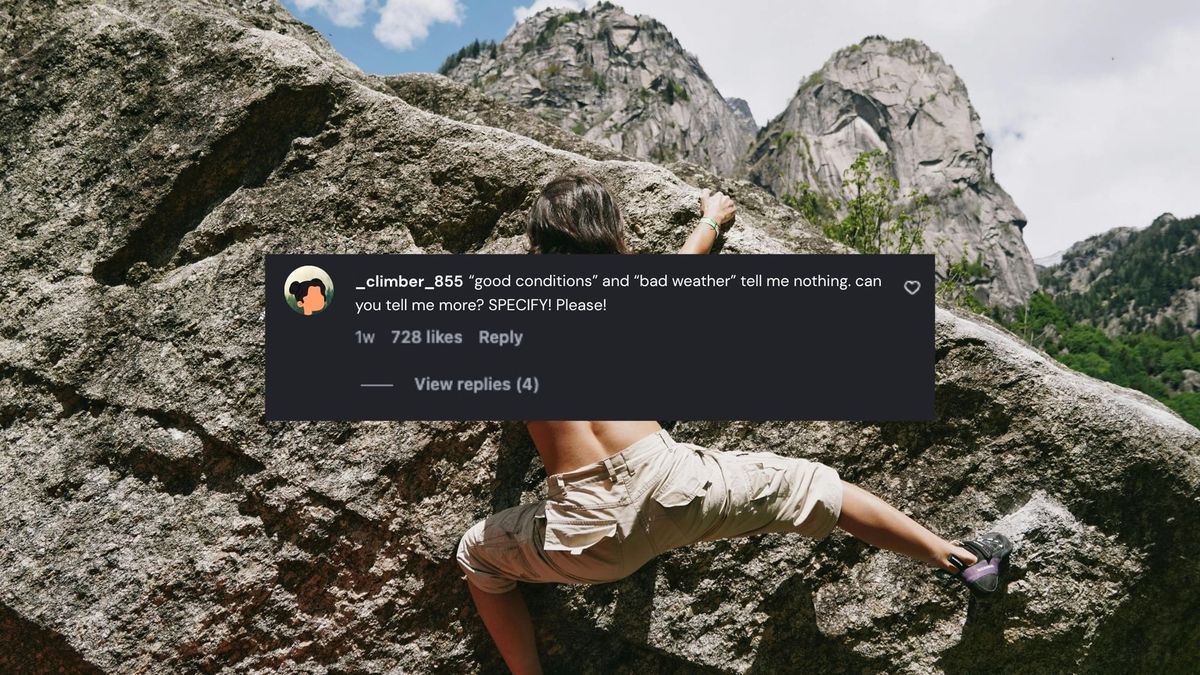
A typical alpine trip report might read: "We initially found the route in good conditions, but retreated in the face of bad weather and difficult mixed terrain." Such statements convey almost nothing about the actual experience, even from a technical standpoint. What did “good conditions” mean on that kind of route? What was the actual “bad weather”? What specific kind of “mixed terrain” did the author encounter?
Using a similar number of words in a technical report, you could replace “good conditions” with “dry rock” or “solid ice,” depending on the kind of route. In a literary story, you could add colors, shapes, textures, and temperatures to create a feeling of atmosphere, theme, and mood: “the dry rock felt as warm as skin,” “swells of ice glowed a deep azure,” or “a sense of confluence arose between the steady rhythm of my breaths and the cobalt silence of this place.”
You could replace "bad weather" with "rainstorm," "thundersnow," "intense heat," and so on. Or you could create a brief image for a literary story: "Under the blazing sun, the entire mountain appeared to be melting, dissolving into running water and thin air." You could replace "mixed terrain" with "patches of ice-encrusted gneiss," "thick icicles hanging from gully walls," "cracks, at times filled with ice"—or for a literary story, "verglas shimmered across granite slabs."
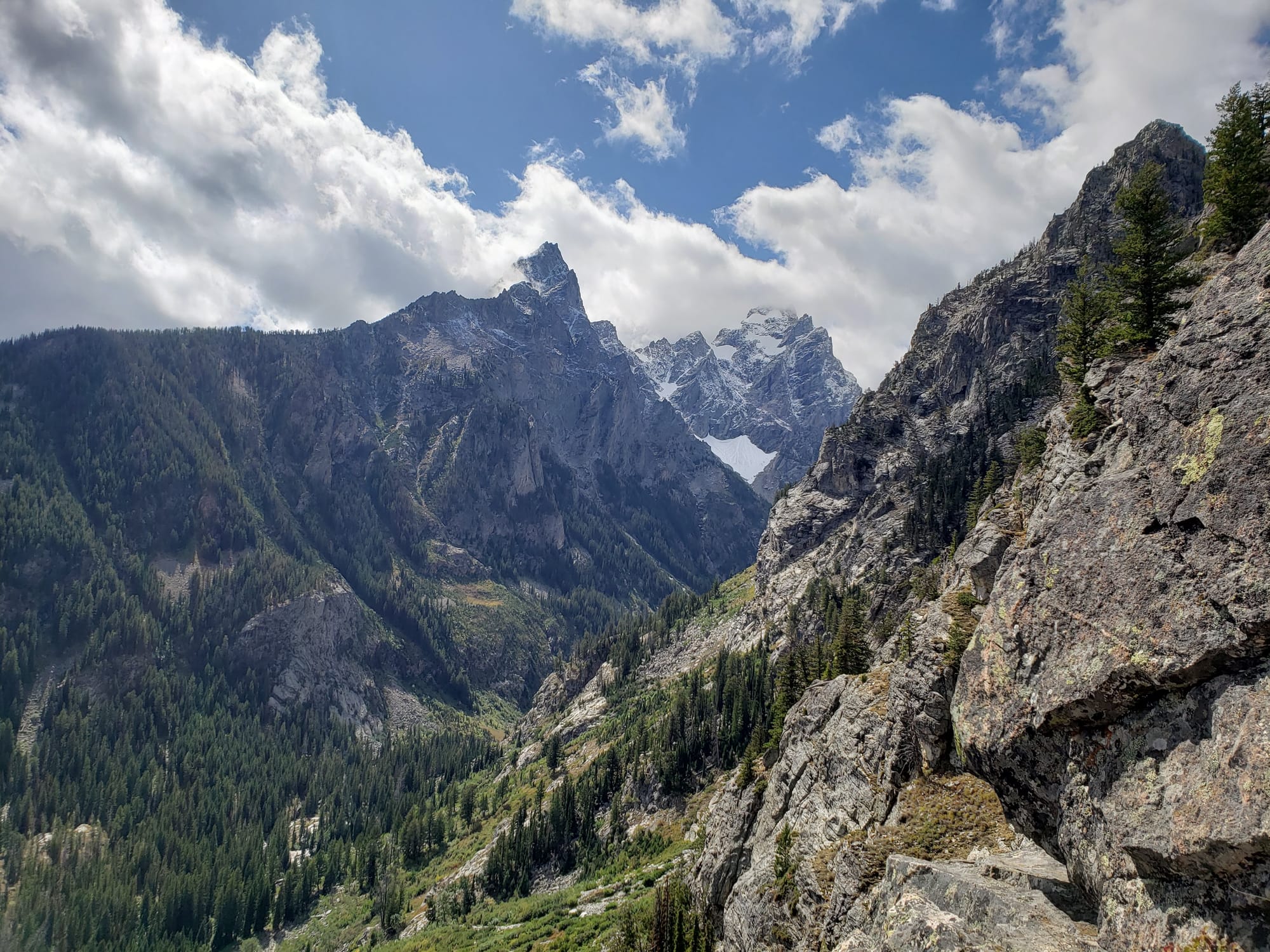
Writers can rely on similar techniques to depict the inner ranges of the mind. Instead of an abstract statement, such as "I feel at peace in the landscape," in Alpinist 63, Szu-ting Yi wove the sensory details of the mountain into her prose to evoke the particular sensations of that peace: "The soft morning light shone on everything without discrimination, until the sky, the mountains, the lake, the flowers and the dew all seemed to express some radiant essence — a oneness that assimilated me as well."
During some of our best moments, whether we are climbing, skiing, or simply wandering, we feel the boundaries between ourselves and our surroundings fade. We remember (if we've forgotten) that we are part of nature. Afterward, we can let echoes of those moments resonate throughout our words — resounding with an awareness of all that connects humans, mountain goats, snow crystals, circling ravens, deep forests, and distant stars.
About Katie Ives
A graduate of the University of Iowa Writers’ Workshop and the Banff Mountain and Wilderness Writing program, a recipient of the H. Adams Carter Literary Award, and former editor-in-chief of Alpinist, Katie Ives (she/they) has written for The New York Times, Outside, and Adventure Journal, as well as many other outlets. Her book Imaginary Peaks: The Riesenstein Hoax and Other Mountain Dreams earned a Special Jury Mention at the Banff Mountain Book Festival in 2022, and one of her Himalayan Journal articles was a finalist for the Mountaineering Article Award in 2025. Katie is committed to supporting emerging storytellers, particularly those with less access to formal writing instruction.